· 3 November 2026
PLN, PDG and Granular Energy launch first project on renewables time-matching in Indonesia
Indonesia's Renewable Energy Certificate (REC) system has given energy buyers traceability of their clean energy purchases since 2020. As international reporting requirements, standards and guidelines set by the Science Based Targets initiative (SBTi), the Climate Group and the Greenhouse Gas Protocol move towards more granular standards, pioneering corporate buyers are looking to their energy utilities to support them in the transition and continued decarbonisation.
As Indonesia accelerates its energy transition, the role of electricity utilities is evolving beyond supplying reliable power and annually matched renewable energy certificates. Corporate customers increasingly require more transparent and granular solutions to demonstrate the alignment between their electricity consumption and renewable energy generation.
In response to this development, Perusahaan Listrik Negara (PLN), Indonesia’s state-owned utility, is advancing its Green Energy as a Service (GEAS) offering, including a time-matched REC (T-REC) GEAS programme that it is developing with Princeton Digital Group (PDG), to support corporate customers in achieving more credible and measurable decarbonisation outcomes.
Under a pre-commercial cooperation agreement, PLN, PDG and Granular Energy will spend the next 12 months testing time-based matching across PDG’s data centres in Indonesia. Using the Granular Energy platform, the partners will measure how closely the renewable generation behind each certificate tracks PDG’s electricity consumption at progressively shorter intervals, beginning with a 100% monthly matching target.
PLN and PDG intend the pilot to lead to a jointly developed T-REC GEAS programme, targeted for 2028, with a pathway to hourly matching. Whereas annual matching can mask seasonal gaps between when clean electricity is generated and when it is consumed, time-based matching reflects how electricity is actually supplied, giving utilities and customers the transparency they need to align clean generation more closely with consumption.
A partnership based on traceable clean power
For PLN, the partnership is an opportunity to co-create a time-matched clean energy offer with PDG and test how it can serve Indonesia's fast-growing corporate demand, starting with data centres, one of its most energy-intensive segments. With multiple data centres operating in Indonesia and a growing energy load, sustainability is a core focus for PDG. For PDG, whose data centres underpin critical digital infrastructure, a diversified, locally generated carbon-free energy supply is also a matter of energy security and operational resilience.
PDG is pursuing progressively more granular carbon-free energy matching in adherence with internationally recognised standards. With PLN, PDG is targeting 100% monthly matching from the outset of the collaboration. Across its portfolio, PDG is targeting 75–100% weekly matching by the end of 2032, 75–100% daily matching by the end of 2034 and 75–100% hourly matching by the end of 2036. PDG is going beyond conventional annual procurement and working closely with local partners such as PLN because each step towards finer granularity demands more firm, flexible and storage-backed clean generation. PDG recognises that the greater value of increasingly granular, time-matched certificates should be duly reflected in the commercial arrangements that support them.
Michael Martin, Group Head of Energy & Environment at PDG, commented, “Planning for the long-term energy needs of data centres requires a clearer picture of how renewable generation matches electricity demand. Our collaboration with PLN to develop a T-REC GEAS programme, starting with monthly matching in Indonesia, will inform our procurement decisions and support progress towards our portfolio-wide weekly, daily and hourly matching targets. Time-matched certificates that meet RE100 technical criteria will bring greater transparency and rigour to our clean energy procurement. Ultimately, we aim to strengthen the energy security and resilience of our data centres with sustained demand for firm, diversified carbon-free generation.”
PLN Icon Plus, the digital energy services arm of PLN, will utilise Granular Energy technology to manage PLN-issued RECs, perform allocations meeting RE100 technical criteria and deliver audit-ready reporting. These tools enable PLN to provide corporate customers, such as PDG, with the data and audit trail they need to meet internal targets and comply with international reporting standards.
Time-based matching is not only a tool to strengthen the credibility of customers' clean energy claims, but also a planning instrument for the power system. By identifying when renewable energy generation falls short of customer demand, time-based matching can provide valuable insights for PLN in planning future renewable generation, energy storage and flexibility solutions. This creates opportunities to align corporate demand with Indonesia's evolving electricity system and accelerate the development of a more reliable and sustainable energy supply.
PLN’s Commercial and Retail Director, M. Fahrur Rozy, said, “PLN is committed to supporting corporate customers in meeting their decarbonisation goals through credible, transparent and traceable renewable energy solutions. Through this collaboration with PDG and Granular Energy, PLN is validating time-based renewable energy matching as part of the development of its Green Energy as a Service offering. Beyond providing greater transparency in renewable energy consumption, this initiative will help PLN better understand the evolving energy needs of corporate customers, inform future investments in renewable generation and energy storage and develop scalable solutions that can support Indonesia’s energy transition.”
Time-based matching comes to Indonesia
“Matching” describes how well the RECs a company holds line up with the electricity it actually consumes. Matching can be done at various measurement granularities, including annual, quarterly, monthly, weekly, daily and hourly. Annual matching nets volume out across 12 months, so a surplus in one season can cover a shortfall in another. This is the most common matching granularity globally.
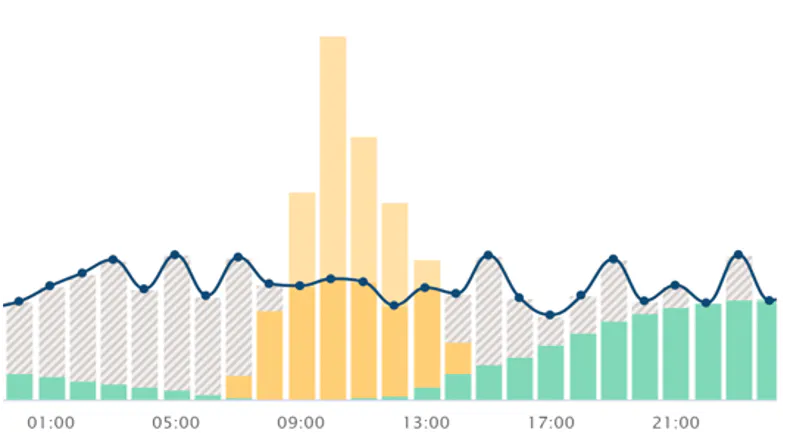
This illustrative graphic shows a demand profile that is 100% matched with wind and solar generation on an annual basis, but only 62% matched on an hourly basis.
Granular matching requires consumption to be matched with certificates generated within the same measurement granularity: monthly matching requires certificates from the same month as consumption, weekly matching from the same week and so on. When moving from one granularity to the next, the gaps in generation for that granularity are identified and can be targeted through procurement and demand changes.
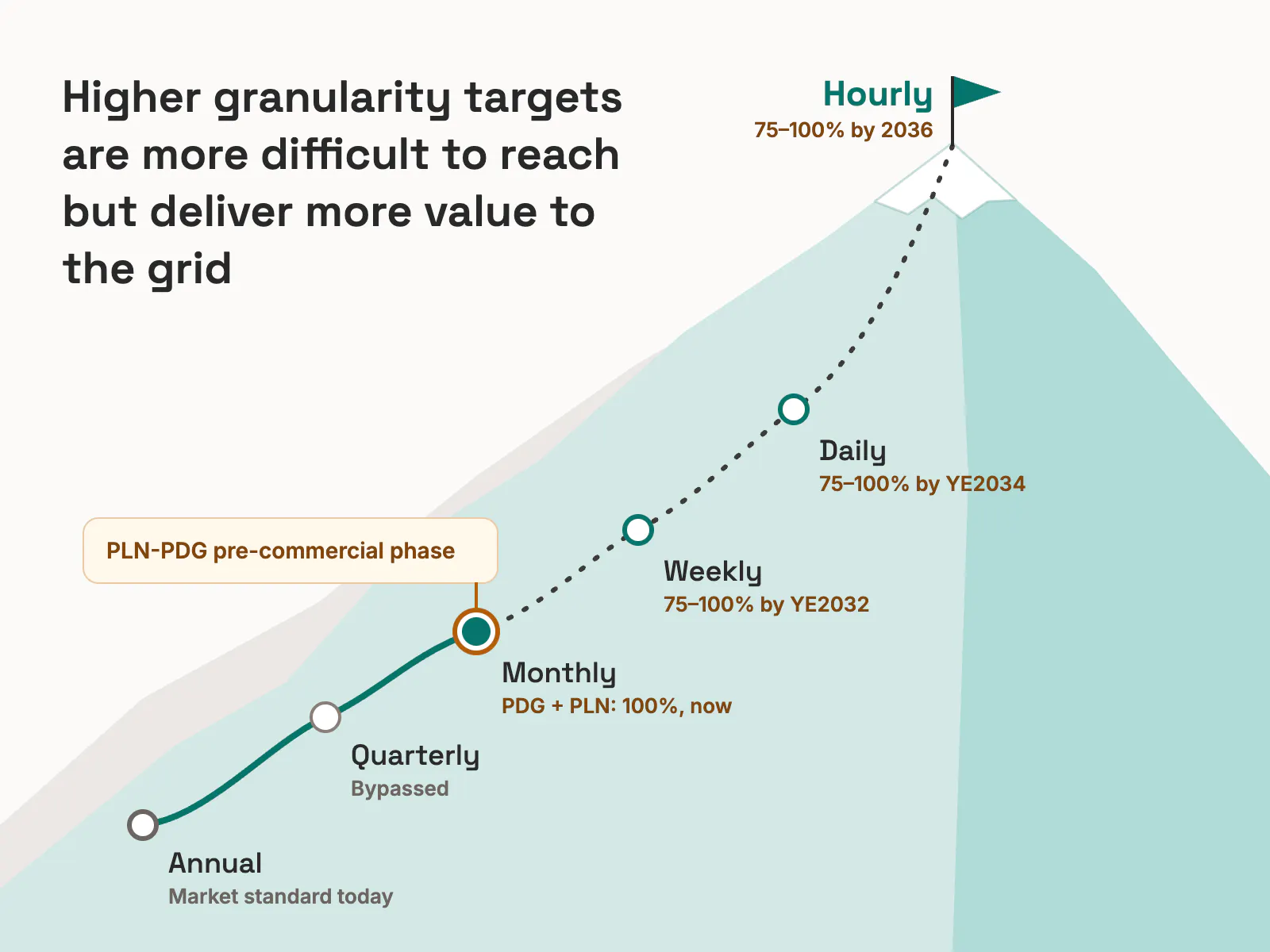
Monthly matching is the first granularity targeted by PDG and PLN. The move from annual to monthly matching reveals differences in generation between Indonesia’s wet and dry seasons, where we are likely to see strong variation in solar and hydro generation. Annual matching hides this seasonality, allowing a strong, hydro-heavy wet season to cover up a cloudy dry season. In time-based matching systems, flexibility and baseload become more important. Of the 15.75% share of renewables in total installed capacity recorded in 2025, 48.5% came from hydropower, 20.4% from bioenergy and 17.6% from geothermal energy[1]. This portfolio of clean firm assets, paired with the additional 100 GW of solar targets, provides Indonesia with a strong foundation to meet hourly clean energy demand.
Time matching aligns with Indonesia’s energy plans
By highlighting hours where renewable production is too low to cover demand, we reveal where clean energy development will be most practical and impactful. Today, even where renewables make up a large portion of supply, their intermittency means dispatchable conventional generation is still needed to maintain reliability during the evening hours. Clean technologies will need to fill those gaps, and batteries are fast becoming the go-to technology for that. Indonesia’s RUPTL[2] 2025-2034 plans for significant energy storage, and PLN is already actively working to bring on more solar plus battery storage through its Diesel Replacement Programme (DRP). Through DRP, PLN is concurrently improving the hourly availability of clean energy and strengthening the security of its energy supply with local assets. Domestic renewable resources such as solar, hydro, geothermal and bioenergy are not exposed to the supply and price volatility of imported fuels. Through hourly matching, the gaps that can be filled by flexible and home-grown strategies become visible and actionable, which over time builds national energy resilience.
Camille Lamb, Commercial Manager at Granular Energy, added, “Moving to more granular matching means pairing each unit of consumption with certificates generated in the same month, week, day or hour. That requires reliable interval metering data, precise certificate allocation and an audit trail that buyers and auditors can trust. The Granular Energy platform automates that process. With clear targets, a joint initiative and the tools to carry it out, this partnership with PLN and PDG is a guide for hourly matching that can be replicated in many markets. We’re glad to support this work and help it inspire other energy buyers across Indonesia and beyond.”
The transparency the Granular Energy platform provides through the matching process will give PLN and PDG the information they need to identify and fill shortfalls by expanding the existing portfolio and looking to new technologies. For PLN, the pilot marks a step in its evolution from supplying renewable electricity and annually matched certificates to delivering data-driven clean energy services that help corporate customers and the national power system decarbonise together. The results of this validation phase will shape the T-REC GEAS programme that PLN and PDG are developing together for corporate customers, including data centres and FMCG companies. They will also give PDG transparency on its clean energy supply and support Indonesia’s energy transition.
[1] https://www.esdm.go.id/id/media-center/arsip-berita/bauran-ebt-di-sektor-listrik-lampaui-target-rukn
[2] RUPTL (Rencana Usaha Penyediaan Tenaga Listrik) is PLN’s 10-year Electricity Supply Business Plan, approved by the Ministry of Energy and Mineral Resources, which guides national power generation, transmission and infrastructure development.
Share article
More insights
News · 02.11.2026
Granular Energy and Mitsubishi Research Institute partner to bring hourly matching to Japan
Granular Energy and Mitsubishi Research Institute (MRI) have signed a memorandum of understanding to bring hourly matching to the Japanese market. The partnership, agreed on 8 October 2026, will help retailers, power companies and corporates adopt systems accredited by EnergyTag, the international non-profit that sets standards for tracking renewable energy hour by hour.
30.10.2026
From matching score to procurement strategy: our new white paper with STX
The conversation around low-carbon electricity is shifting from annual volumes to deliverability and timing. With SBTi Corporate Net-Zero Standard Version 2 introducing geographic matching requirements and hourly disclosure expectations for larger electricity consumers, organizations need to understand how their current portfolios perform on both. In this joint STX Group and Granular Energy paper explore how companies can use granular data today to establish a baseline, assess procurement options and prepare for an increasingly granular energy landscape.